SDG-Wechselbeziehungen durch Bildungsmigrationserfahrungen
January - December 2026
International students become peer educators, sharing lived experience to help the Global North understand how interconnected global challenges shape access to education.
The Problem
Education doesn't fail in isolation — it's pulled down by everything around it
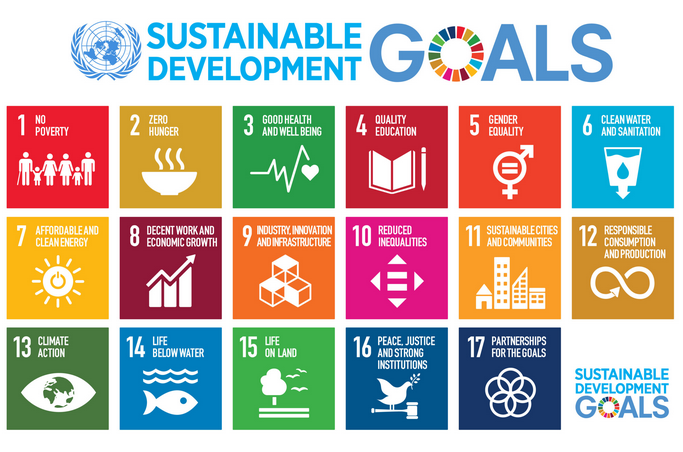
Many SDGs remain off-track. Weak healthcare, gender inequality, and limited access to clean water and energy all feed back into who gets to learn — and for how long. These links are rarely explored in education programmes in the Global North.
Clean Water and Energy
A child without electricity or water at home struggles to study.
Gender Equality
A girl facing discrimination may be pulled out of school early.
Gender Equality
A girl facing discrimination may be pulled out of school early.
Focus
Built around SDG 4 "Quality Education" - and everything it touches
You can get all the Information on SDGs on the Website of the United Nations Department of Economic and Social Affairs
04
Quality Education
the anchor goal, explored through six connected SDGs
SDG 3: Gesundheit und Wohlergehen
Targets of SDG 3
3.1. Maternal mortality
By 2030, reduce the global maternal mortality ratio to less than 70 per 100 000 live births.
3.2. Neonatal and child mortality
By 2030, end preventable deaths of newborns and children under 5 years of age, with all countries aiming to reduce neonatal mortality to at least as low as 12 per 1000 live births and under-5 mortality to at least as low as 25 per 1000 live births.
3.3. Infectious diseases
By 2030, end the epidemics of AIDS, tuberculosis, malaria and neglected tropical diseases, and combat hepatitis, waterborne diseases and other communicable diseases.
3.4. Noncommunicable diseases
By 2030, reduce by one third premature mortality from noncommunicable diseases through prevention and treatment, and promote mental health and well-being.
3.5. Substance abuse
Strengthen the prevention and treatment of substance abuse, including narcotic drug abuse and harmful use of alcohol.
3.6. Road traffic
By 2020, halve the number of global deaths and injuries from road traffic accidents.
3.7. Sexual and reproductive health
By 2030, ensure universal access to sexual and reproductive health-care services, including for family planning, information and education, and the integration of reproductive health into national strategies and programmes.
3.8. Universal health coverage
Achieve universal health coverage, including financial risk protection, access to quality essential health-care services, and access to safe, effective, quality and affordable essential medicines and vaccines for all.
3.9. Environmental health
By 2030, substantially reduce the number of deaths and illnesses from hazardous chemicals and air, water and soil pollution and contamination.
SDG 6: Sauberes Wasser und Sanitäreinrichtungen
Targets of SDG 6
6.1. Access to Drinking Water
By 2030, universal and equitable access to safe, affordable drinking water for all.
6.2. Access to Sanitation and Hygiene
By 2030, access to adequate, equitable sanitation and hygiene for all, and an end to open defecation, with special attention to women, girls, and people in vulnerable situations.
6.3. Higher Water Quality
By 2030, better water quality by reducing pollution, ending dumping, and minimizing hazardous chemicals. This includes halving the share of untreated wastewater and substantially increasing recycling and safe reuse.
6.4. Better Use of Water
By 2030, substantially greater water-use efficiency across all sectors, sustainable freshwater withdrawals and supply, and fewer people suffering from water scarcity.
6.5. Water Resource Management
By 2030, integrated water resources management at all levels, including transboundary cooperation where appropriate.
6.6. Protection of Eco-Systems
By 2020, protection and restoration of water-related ecosystems such as mountains, forests, wetlands, rivers, aquifers, and lakes.
SDG 10: Weniger Ungleichheiten
Targets of SDG 10:
10.1. Income growth for the poorer half
By 2030, income growth of the bottom 40% of the population that is faster than the national average.
10.2. Inclusion for all
By 2030, social, economic, and political inclusion of everyone, regardless of age, sex, disability, race, ethnicity, origin, religion, or economic status.
10.3. Equal opportunity
Equal opportunity and less inequality of outcome, including by abolishing discriminatory laws, policies, and practices.
10.4. Fairer policies
Policies on taxes, wages, and social protection that progressively lead to greater equality.
10.5. Better financial regulation
Improved regulation and monitoring of global financial markets and institutions, and stronger enforcement of those rules.
10.6. A voice for developing countries
Stronger representation and say for developing countries in global economic and financial institutions.
10.7. Safe and orderly migration
Orderly, safe, regular, and responsible migration and mobility, including through well-managed migration policies.
SDG 5: Geschlechtergleichheit
Targets of SDG 5
5.1. End Discrimination against Women and Girls
End all forms of discrimination against all women and girls everywhere.
5.2. End all Violence against and Exploitation of Women and Girls
Eliminate all forms of violence against all women and girls in the public and private spheres, including trafficking and sexual and other types of exploitation.
5.3. Eliminate Forced Marriages and Genital Mutilations
Eliminate all harmful practices, such as child, early and forced marriage and female genital mutilation.
5.4. Value unpaid Care and promote shared domestic Resposibilities
Recognize and value unpaid care and domestic work through the provision of public services, infrastructure and social protection policies and the promotion of shared responsibility within the household and the family as nationally appropriate.
5.5. Ensure full Participation in Leadership and Decision-Making
Ensure women’s full and effective participation and equal opportunities for leadership at all levels of decision-making in political, economic and public life.
5.6. Universal Access to Reproductive Health and Rights
Ensure universal access to sexual and reproductive health and reproductive rights as agreed in accordance with the Programme of Action of the International Conference on Population and Development and the Beijing Platform for Action and the outcome documents of their review conferences.
5.7. Equal Rights to Economic Resources, Property Ownership and Financial Services
Undertake reforms to give women equal rights to economic resources, as well as access to ownership and control over land and other forms of property, financial services, inheritance and natural resources, in accordance with national laws.
5.8. Promote Empowerment of Women throughTechnology
Enhance the use of enabling technology, in particular information and communications technology, to promote the empowerment of women.
5.9. Adopt and Strenghten Policies and Enforcable Legislation for Gender Equality
Adopt and strengthen sound policies and enforceable legislation for the promotion of gender equality and the empowerment of all women and girls at all levels.
SDG 7: Bezahlbare und saubere Energie
Targets of SDG 7:
7.1. Energy for everyone
By 2030, universal access to affordable, reliable, modern energy services.
7.2. More renewables
By 2030, a substantially larger share of renewable energy in the global energy mix.
7.3. Better efficiency
By 2030, a doubling of the global rate of improvement in energy efficiency.
SDG 17: Partnership for the Goals
Targets of SDG 17:
17.1. Stronger tax and revenue systems
Strengthen domestic resource mobilization, including through international support, so developing countries can collect taxes and other revenue.
17.2. Keeping aid promises
Developed countries fully deliver on their official development assistance commitments, including 0.7% of gross national income for developing countries and 0.15-0.20% for least developed countries.
17.3. More money from more sources
Mobilize additional financial resources for developing countries from multiple sources.
17.4. Sustainable debt
Help developing countries reach long-term debt sustainability through financing, debt relief, and restructuring, and address the external debt of heavily indebted poor countries.
17.5. Investment for the least developed
Adopt and implement investment promotion regimes for least developed countries.
How it works
A Training of Trainers approach, from ten multipliers to a wider student audience
1
Train ten multipliers
A group of 10 international students receives structured training on global learning and the SDG interconnections.
2
Conduct Peer Interviews
Multipliers interview fellow students to gather first-hand educational migration experiences.
3
Publish a special MIGRANTh edition
Multipliers interview fellow students to gather first-hand educational migration experiences.
4
Facilitate Workshops
Multipliers lead workshops for students at the University of Erfurt and Friedrich Schiller University Jena.
Reach and Dates
Who it´s for and where it starts
Workshop audience
Around 30–40 students from the University of Erfurt and Friedrich Schiller University Jena take part in the resulting workshops.
17. March 2026 - Training 1: Foundations of Global Learning
6:30 pm — the first multiplier training session.
16. October 2026 - Training 2
9 am - 2 pm at the University of Erfurt
Workshop Registration Form
SDG-Wechselbeziehungen durch Bildungsmigrationserfahrungen wird gefördert von:
Gefördert von ENGAGEMENT GLOBAL mit Mitteln des BMZ: